Bianca Hall performs “Hark, the echoing air”

94_Cupid_F90x70[1][1]Henry Purcell (1659-95) was to English music what Shakespeare was to English theater. Purcell composed “Dido and Aeneas,” the first opera we have in English, and many other works for the musical stage, including “The Fairy Queen.” Many sopranos (and a few tenors) have made its famous aria “Hark, the echoing air” a showpiece of their skills.

Britten created his own performing editions of “The Fairy Queen,” “Dido and Aeneas,” and many other works of Purcell. In Britten’s concert arrangement of this famous aria, the vocal parts and bass lines were preserved intact, while the orchestral accompaniment is re-imagined in a modern idiom.

Click here to view Bianca Hall’s performance of “Hark, the echoing air,” from our recent “Britten in Song” concert in Glendale. Krystof Van Gyrsperre is at the piano. Winged cupids are prominently featured.

American Portraits: Andrew Garland

new-3c.s600x600Our friends Andrew Garland and Donna Loewy have been on tour again, with song recitals in Atlanta, Texas, and other locations. Andy is one of the most dynamic and theatrically gifted performers of art song in this country, and Donna is a peerless collaborator at the piano. They are in the vanguard of artists working to preserve art song as a living tradition in the 21st century.

Don’t know why this didn’t occur to us sooner–but here’s a plug for their recently released CD recording. “American Portraits” is a compendium of art songs by living American composers, and has been enthusiastically praised in many quarters. (ALL Amazon reviewers have rated it 5 stars.) Click here for an OPERA NEWS review. The Amazon link is here.

If you’d like an introduction to Andy and Donna’s artistry and sense of humor,
click here for a performance of Lori Laitman’s “Men with Small Heads.”

Jonathan Mack performs “At the mid hour of night”

Following up our January 16 post featuring Jonathan Mack, here is a second Britten folk song setting. The author of “At the mid hour of night” was poet and songwriter Thomas Moore’s, whose collection “Irish Melodies” from was published in 1807. Moore’s poem is typical of the lyrical nostalgia found in much Irish poetry of that era. Jonathan’s rendition of Britten’s arrangement perfectly captures this feeling.

Click here to view the video of Jonathan Mack singing “At the mid hour of night.”
Kristof Van Grysperre is at the piano. This is from the 2013 concert by the Spacious Vision Song Project at St. Mark’s Episcopal Church in Glendale, CA.

Kristof Van Grysperre hard at work on “Queenie Pie”

In his role as Associate Conductor at Long Beach Opera, Kristof Van Grysperre (a member of the Project) and his colleagues have been hard at work preparing an exciting new production for its imminent premiere–Duke Ellington’s jazz opera “Queenie Pie.”

LongBeachOperaQueeniePieIt took many years before a complete performance of Ellington’s unfinished opera was attempted. (The first attempt was in 2008 at the Oakland Opera Theater.) Kristof and the team of singers at Long Beach Opera have worked long hours developing a revised performing version, which will be performed on Jan. 26, Feb. 1, and Feb. 2. Click here for more information. Best wishes for a successful run!

AND: For a classic performance of an “aria” from the original Ellington charts, check out Andre´ DeShields singing “My Father’s Island” in a 1983 broadcast of “Great Performances.”

1,000 and 700 and counting!

Our YouTube channel has just passed a landmark number–more than 1,000 views of Spacious Vision performance videos! Clearly, our online audience is growing. And over at our SoundCloud archive, the number of listens has passed 700.

Our most popular video is Pamela Dellal’s performance of the complete “Charm of Lullabies” by Benjamin Britten, with Gerald Seminatore’s selections from “Winter Words” coming in a close second, followed by John Seesholtz’s performances from our World AIDS Day concerts. On SoundCloud, Barbara Kilduff is the clear favorite. While we don’t know who is listening, we are glad for the interest! More additions to both archives are coming soon.

Jonathan Mack sings “The Salley Gardens”

From our 2013 “Britten in Song” concert at St. Mark’s in Glendale, CA, here is a video performance by tenor Jonathan Mack of “The Salley Gardens,” one of Britten’s most popular folk song settings. Jonathan’s performance perfectly captures the intimacy of the song, and his vocalism recalls (and surpasses) the classic recording by Peter Pears. Kristof Van Grysperre is at the piano. Read on for a few clues to enhance your enjoyment!

hqdefaultBackground. Down by the Salley Gardens (Irish: Gort na Saileán) is a poem by William Butler Yeats, first published in 1889. It was based on the words of an older folk song, to which Yeats added new words of his own. The tune Britten used for his 1943 setting was “The Moorlough Shore,” which Irish composer Herbert Hughes had also used for his classic 1909 setting of the Yeats poem.

Some clues. The “Salley Gardens” may have been on the banks of the river at Ballysadare near Sligo. “Salley” or “sally” is a form of the Standard English word “sallow”, i.e., a tree of the genus Salix. It is close in sound to the Irish word saileach, meaning willow.

Click here for the video of “The Salley Gardens.”

Down by the salley gardens my love and I did meet;
She passed the salley gardens with little snow-white feet.
She bid me take love easy, as the leaves grow on the tree;
But I, being young and foolish, with her would not agree.
In a field by the river my love and I did stand,
And on my leaning shoulder she laid her snow-white hand.
She bid me take life easy, as the grass grows on the weirs;
But I was young and foolish, and now am full of tears.

Pamela Dellal announces release of “Reviving Song”

Our own mezzo soprano Pamela Dellal is no stranger to the recording studio, and she has just announced the release of her latest CD project. You can read more about this project, and order copies, at Pamela’s website. Here are the details:

REVIVING SONG

Works by Fanny Mendelssohn Hensel, Héléne Montgeroult & Louis Spohr

Pamela Dellal, mezzo-soprano
Diane Heffner, period clarineT
Vivian Montgomery, fortepiano

WSRC

A Lied for Three Kings Day (Jan. 6)

For many folks, a song in a foreign language can sound unfriendly, but we certainly want to introduce songs from different countries to our listeners! Here’s one attempt to cross the language barrier–a track from our 2013 Holiday concert (in German), with an introduction to the song, along with a photo montage which includes an English translation. Click here for “Die Könige” (The Kings) by Peter Cornelius. Happy 12th day of Christmas!999px-Magi_1-Wikimedia-Commons

A Musical Christmas Greeting

FLED-Plastic-Christmas-Starrom our 2013 Holiday concert, here is
a pair of songs by American folklorist John Jacob Niles that shine with a radiant simplicity. We invite you to hear “What Songs Were Sung,” performed by Gerald Seminatore, and the classic folk song “I Wonder as I Wander,” performed by Barbara Kilduff. Libor Dudas is at the piano. Our sincere wishes for a happy and musical Christmas season!

Hugo Wolf “Schlafendes Jesuskind”

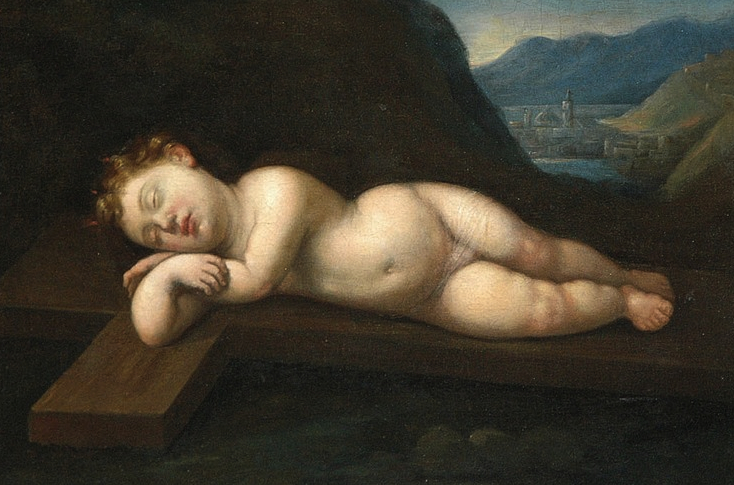
Continuing our participation in the musical energy of this holiday season, this week’s post introduces German composer Hugo Wolf’s famous song “Schlafendes Jesuskind” (Sleeping Infant Jesus). Wolf’s music is in late Romantic style, with echoes of Richard Wagner and a subtle interplay between harmony and text. The image rich poem is by Eduard Mörike (1804-1875 ), who was inspired by a painting in the style of Francesco Albani (Italy, 1578-1660).

The poem’s German text and an English translation appear below the picture. We invite you to read the poem, and then to click here for a live, unedited 2013 performance of “Schlafendes Jesusukind” by tenor Gerald Seminatore and pianist Libor Dudas.

Infant_Christ_Asleep_on_the_cross_manner_of_Francesco_Alfani

Sohn der Jungfrau, Himmelskind!
Son of the Virgin, Heaven’s child!

Am Boden auf dem Holz der Schmerzen eingeschlafen,
On the ground, asleep upon the wood of suffering,

Dass der fromme Meister, sinnvoll spielend,
That the devout painter– with gentle allusion –

Deinen leichten Träumen unterlegte;
has placed under your light dreams;

Blume du, noch in der Knospe dämmernd,
You flower, still  in the opening bud,

Eingehüllt die Herrlichkeit des Vaters!
Encased in the glory of of your Father!

O, wer sehen könnte, welche Bilder
O, who could see, what pictures

Hinter dieser Stirne, diesen schwarzen Wimpern
Behind this brow, and these dark lashes,

Sich in sanftem Wechsel malen!
Are being painted in gentle changes!

(Trans. Gerald Seminatore)